Evercrew Venture Pte Ltd | AI Workflow Automation, Local LLM & AI Agents Singapore
Singapore AI Automation

Your workflow.
Your data.
Your AI.

Evercrew Venture Pte Ltd helps Singapore SMEs automate operations with practical AI systems, AI agents, local LLM deployments, and workflow automation designed around real business processes.

Empowering Intelligence – Creating Values. ECV
AI Workflow Automation Local LLM Hybrid AI AI Agents Google Workspace CRM Integration
Singapore Business District Skyline
🇸🇬 Singapore AI Automation
Enterprise AI Architecture
Business Operations
User Interface
AI Processing
AI Agent Layer
AI Intelligence
LLM Layer
Business Systems
Data Layer
Security
Governance Layer
8+
AI Solution Types
3
Deployment Architectures
100%
Singapore Focused
SME
Purpose-Built
Evercrew at a Glance

A Singapore AI Company for Practical SME Automation

Evercrew Venture Pte Ltd (UEN 202551047C) helps Singapore SMEs design, build, and deploy AI workflow automation systems that are useful in daily operations, not just impressive in demos.

Who We Are

Evercrew is a Singapore-based AI workflow automation and local LLM deployment company focused on practical SME operations, business process automation, and responsible AI adoption.

What We Build

We build AI Admin Assistants, AI Sales Assistants, AI Customer Service Assistants, document processing workflows, CRM automation, Google Workspace automation, Telegram workflows, and custom AI agents.

How We Deploy

Depending on data sensitivity, cost, speed, and business needs, Evercrew can deploy cloud AI, local AI, or hybrid AI architectures using OpenAI, Claude, Qwen, Ollama, local LLMs, n8n, PostgreSQL, Qdrant, and APIs.

How We Govern AI

Our AI systems are designed with human-in-the-loop review, access control, audit trails, data minimisation, model selection discipline, and standards-aligned responsible AI practices.

Open Source EVE

EVE, Evercrew Virtual Environment, is our open-source local AI operating system for SMEs. It helps businesses explore local LLMs, Telegram task management, and human-approved AI workflows.

Who We Serve

We serve Singapore SMEs across retail, e-commerce, F&B, logistics, professional services, healthcare clinics, education, training, and other businesses with repetitive administrative and operational work.

What We Do

AI That Works Inside
Your Business

Most SMEs do not need more software.
They need better systems.

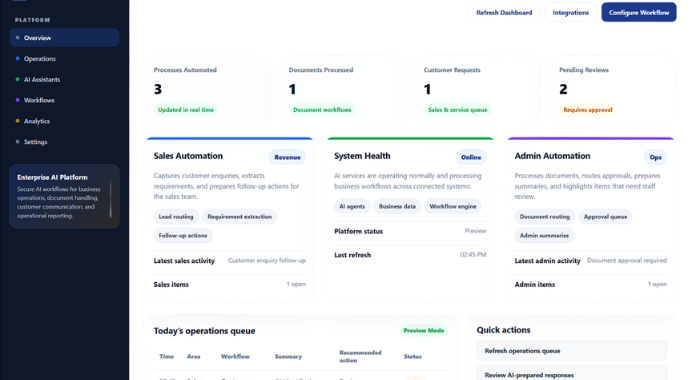
Evercrew designs AI workflows that become part of daily business operations. In practical terms, AI workflow automation uses AI agents, business rules, and integrations to automate admin work, route documents, manage customer communications, update CRM records, and connect existing tools such as Gmail, Google Sheets, Google Drive, WhatsApp, and business systems.
Productivity
Automation
Accuracy
Cost Reduction
Efficiency
Operational Visibility
Enterprise Workflow Dashboard
Practical
AI that works after the meeting ends.
Integrated
Connects to your existing tools and data.
What We Build

Six Core AI Solutions

From admin to customer service to infrastructure — Evercrew builds AI that integrates into your actual operations.

AI Admin Assistant

Automates email summarisation, document routing, invoice processing, task reminders, and CRM updates — reducing daily admin overhead for your team.

Workflow Automation
AI Customer Service Assistant

Always-on AI handling customer queries, FAQs, and escalations across chat, email, and messaging — with seamless human handoff when required.

AI Agents
AI Sales Assistant

Automated lead follow-up, pipeline management, proposal drafting, and CRM updates — so your sales team focuses on conversations that close.

CRM Automation
Local LLM Deployment

Deploy AI language models entirely on your own hardware — keeping all business data inside your infrastructure. Full hardware assessment included.

On-Device AI
Document Processing Automation

AI-powered extraction, classification, and routing of invoices, quotations, contracts, and reports — eliminating manual document handling.

Document AI
Google Workspace & CRM Automation

Connect AI to Gmail, Google Sheets, Drive, Docs, WhatsApp, and your CRM — creating automated data flows and business reporting pipelines.

Integration
Deployment Architecture

Cloud AI, Local AI, or Hybrid AI

Evercrew designs the right AI architecture for your security requirements, data sensitivity, and operational needs.

Cloud AI
Maximum Intelligence

Access the world's most powerful AI models. Best for workloads demanding maximum reasoning capability and elastic scalability.

Fast deployment
Powerful reasoning
Elastic scalability
Data processed externally
Local AI — Recommended
Maximum Data Control

AI runs entirely on your own hardware. Your data never leaves your infrastructure — ideal for sensitive workflows and regulated industries.

Data never leaves your network
Offline operation where needed
Long-term infrastructure ownership
Custom workflow control
Hybrid AI
Best of Both

Sensitive workflows run locally. Compute-intensive tasks route to the cloud. Intelligent routing based on sensitivity and performance requirements.

Security-first routing logic
Cloud power when required
Future-proof architecture
More complex initial setup
Technical Architecture

Evercrew AI Architecture

A full-stack enterprise AI platform — built in layers so each component is independent, secure, and replaceable as your business grows.

Layer 1 — User Interface How users interact with the AI
Dashboard
Email
WhatsApp
Web Portal
Layer 2 — AI Agent Layer Reasoning & decision-making agents
AI Admin Agent
AI Sales Agent
AI Service Agent
AI Knowledge Agent
Layer 3 — Memory Layer Context & business knowledge
Short-Term Memory
Long-Term Memory
Business Knowledge
Layer 4 — LLM Layer Language model intelligence
OpenAI
Claude
Qwen
Local LLM
Hybrid Routing
Layer 5 — Retrieval Layer RAG & knowledge search
RAG
Embeddings
Vector Search
Layer 6 — Data Layer Business data & vector storage
PostgreSQL
Qdrant
Documents
CRM
Email
Layer 7 — Workflow Layer Automation & integration
n8n
APIs
Google Workspace
CRM Integration
Layer 8 — Governance Layer Security & Compliance
Access Control
Audit Trail
Data Privacy
Business Rules
Deployment: Cloud · On-Premises · Hybrid · Data: PostgreSQL · Qdrant · Google Workspace · Models: OpenAI · Claude · Qwen · Local LLM
On-Device AI

Local LLM &
On-Device AI

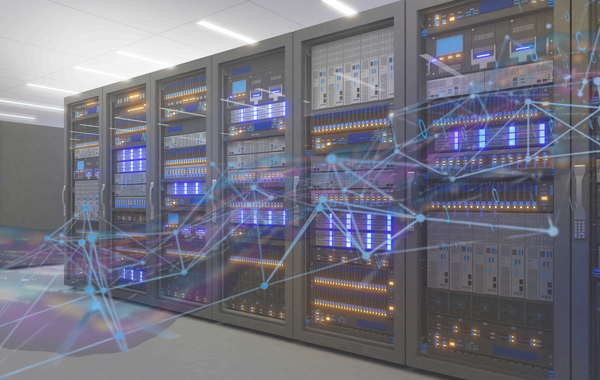
Evercrew helps businesses deploy local AI systems on their own hardware where technically feasible — keeping sensitive data inside your infrastructure.
Greater data control — your inputs and outputs never leave your infrastructure.
Reduced cloud dependency — lower recurring API costs and fewer external dependencies.
Offline capability — workflows that continue operating without internet access.
Custom workflows — AI agents built around your specific processes and document types.
Long-term ownership — once deployed, the system is yours with no ongoing vendor lock-in.
Available Now
Hardware Assessment
We evaluate your infrastructure and recommend the optimal local AI setup.
Coming Soon
Hardware + AI Packages
Complete hardware and software bundles for on-device AI deployment.
Local AI Infrastructure
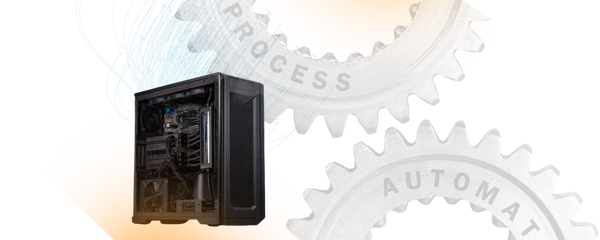
AI Infrastructure Workstation
Ready for a hardware assessment?
We evaluate your infrastructure at no commitment.
Get Assessed
Open Source AI

Explore Our Open Source Projects

We believe AI should be practical, transparent, and accessible.

That's why Evercrew builds and shares open-source AI projects that businesses, developers, and the community can explore, learn from, and build upon.

Free to Use Runs Locally Local LLM Telegram Task Manager Open Source
View on GitHub
Flagship Project
EVE

EVE — Local AI Operating System for SMEs

EVE stands for Evercrew Virtual Environment. It is a local-first AI task manager that helps SMEs experiment with local LLMs, Telegram-based task workflows, and human-in-the-loop approval.

Free to use
Runs on your own computer
Local LLM support through Ollama
Telegram task manager workflow
Open-source project for the community
Industries We Serve

AI for Singapore SMEs
Across Every Sector

Evercrew builds practical AI systems adapted to the specific workflows, compliance needs, and tools used in each industry.

Retail & E-Commerce

AI for customer service, inventory updates, order processing, supplier communication automation, and sales reporting.

Food & Beverage

Reservation management, supplier order automation, staff scheduling, customer feedback routing, and daily operations reporting.

Professional Services

AI for accounting firms, legal practices, and consultancies — document processing, client communication, and admin automation.

Healthcare & Clinics

Appointment management, patient inquiry handling, referral letter drafting, and administrative workflow automation for clinics and healthcare providers.

Logistics & Supply Chain

Shipment documentation processing, supplier communication, delivery status updates, and inventory reconciliation automation.

Education & Training

Enrolment processing, student enquiry management, content summarisation, assessment documentation, and administrative automation.

Business Operations
Our Process

How We Work

A structured five-step process from understanding your operations to a live AI system your team uses every day.

01
Step One
Workflow Audit

Map your current operations, identify repetitive tasks, and understand how your team works today — before selecting any technology.

02
Step Two
Automation Blueprint

Design the automation architecture, identify high-impact opportunities, and model the measurable productivity outcome for each workflow.

03
Step Three
AI Architecture Selection

Select cloud, local, or hybrid deployment based on your data sensitivity, security requirements, and existing infrastructure.

04
Step Four
Build & Test

Build AI systems and workflow integrations, connect your existing tools, and test rigorously against real business scenarios before going live.

05
Step Five
Launch & Support

Train your team, provide documentation, and deliver ongoing operational support to ensure measurable adoption and continuous improvement.

FAQ

Common Questions

Everything you need to know about AI workflow automation, local LLM, open-source EVE, responsible AI, AI standards, model selection, safety, and deployment.

AI Workflow Automation Basics
AI workflow automation uses AI agents and orchestration logic to handle repetitive business tasks automatically, including email processing, document routing, CRM updates, follow-ups, reporting, and internal notifications. The goal is to reduce manual work, improve consistency, and help teams respond faster.
A local LLM is a large language model that runs on your own workstation, server, or private infrastructure instead of sending every request to an external cloud provider. This can improve data control, reduce cloud dependency, support offline workflows, and give SMEs more ownership over sensitive business processes.
Open Source & EVE
EVE is Evercrew's open-source Local AI Operating System for SMEs. It enables businesses to experiment with practical AI using their own computers and local Large Language Models, giving organisations greater privacy, transparency, and control over their AI workflows. EVE currently includes Telegram-based AI task management, employee assignment workflows, local LLM integration, and human approval before task completion.
EVE stands for Evercrew Virtual Environment. It represents a secure local environment where people, AI, business workflows, and organisational knowledge work together. The name EVE also symbolises the beginning of a new journey, just like the eve of a new day, helping SMEs start a positive new chapter in AI exploration.
Evercrew believes practical AI should be accessible, transparent, and useful for businesses of all sizes. By making EVE open source, Evercrew helps SMEs, developers, students, and the wider community learn how local AI systems can be designed, deployed, and improved responsibly.
The latest EVE release is available on GitHub at https://github.com/EVE-ECV/EVE/releases. The main project repository is https://github.com/EVE-ECV/EVE.
Yes. EVE is released as an open-source project and is free to download, use, modify, and learn from under its licence. Organisations that need custom workflows, deployment support, training, or enterprise integration can engage Evercrew separately.
By default, EVE is designed to work with locally hosted LLMs such as Ollama. This means AI processing can remain on your own computer or infrastructure, reducing reliance on external cloud AI services. Optional integrations may connect to third-party services only if the user chooses to enable them.
Yes. While EVE is open source, Evercrew also provides professional services for customised workflows, private deployments, integrations, training, enterprise support, and AI workflow development.
RAG stands for Retrieval-Augmented Generation. It connects AI models to your business documents, policies, SOPs, catalogues, and knowledge bases so the AI can retrieve relevant company information before generating an answer. This helps reduce generic or unsupported responses.
Qdrant is a vector database used to store and search AI embeddings. In practical terms, it helps an AI system find the most relevant document, policy, product detail, or internal knowledge before replying to a user or supporting a workflow.
Cloud AI runs through external AI providers and is strong for scalability, speed of deployment, and access to advanced models. Local AI runs within your own infrastructure for stronger data control and offline capability. Hybrid AI combines both, routing sensitive workflows locally while using cloud AI where greater capability or scalability is needed.
Yes. Evercrew can build AI workflow integrations with Gmail, Google Sheets, Google Drive, Google Docs, WhatsApp, HubSpot, and other CRM or business systems used by Singapore SMEs. The integration approach depends on your current tools, security requirements, and workflow complexity.
Google Workspace automation connects AI workflows to Gmail, Sheets, Drive, Docs, and related tools. For example, AI can summarise incoming emails, extract information from attachments, update a Google Sheet, route documents for approval, or prepare draft replies for human review.
CRM automation uses AI and workflow logic to update customer records, log sales activities, trigger follow-ups, classify leads, generate pipeline reports, and reduce manual data entry. Evercrew designs CRM workflows around how your sales and operations teams actually work.
An AI Admin Assistant handles routine administrative tasks such as summarising emails, extracting document details, routing invoices, preparing internal notes, creating task reminders, updating records, and generating reports. It is designed to support staff, not replace business judgement.
On-device AI runs models directly on a local computer, workstation, or server. Hardware needs depend on the model size, number of users, response speed, and workflow type. Evercrew can assess existing infrastructure and recommend whether local, cloud, or hybrid deployment is the best fit.
AI Standards, Governance & Responsible AI
Evercrew designs AI systems with reference to recognised AI governance and life cycle standards, including ISO/IEC 5338 for AI system life cycle processes, ISO/IEC 8183 for AI data life cycle management, ISO/IEC 42001 for AI management systems, and ISO/IEC 23894 for AI risk management guidance. Unless specifically stated in a contract or certification document, this means standards-aligned engineering guidance rather than a claim of formal certification.
ISO/IEC 5338 provides life cycle processes for AI systems, covering how AI systems are defined, controlled, managed, executed, maintained, and improved. For clients, this matters because AI should be treated as a managed business system, not a one-time chatbot installation.
ISO/IEC 8183 focuses on the AI data life cycle, including data acquisition, creation, development, deployment, maintenance, and decommissioning. This is important because AI quality depends heavily on how business data is collected, prepared, protected, updated, and retired.
ISO/IEC 42001 is an Artificial Intelligence Management System standard. It helps organisations establish, implement, maintain, and improve governance for AI systems. Evercrew can help SMEs adopt practical AI management practices such as documentation, risk controls, access rules, monitoring, and human review workflows.
ISO/IEC 23894 provides guidance for managing risks related to AI systems. Evercrew applies this thinking by identifying workflow risks, data sensitivity, model limitations, human approval points, audit needs, and operational controls before deploying AI into live business processes.
Responsible AI means using AI in a lawful, ethical, secure, transparent, and human-accountable way. For Evercrew, this includes data protection, role-based access, audit trails, human-in-the-loop approvals, risk-based deployment, model monitoring, and clear limits on what AI should or should not do.
AI governance helps SMEs avoid messy deployments where nobody knows what the AI can access, who approved outputs, where data went, or why a decision was made. Good governance makes AI safer, easier to maintain, easier to explain, and more suitable for real business operations.
Yes. Generative AI can sometimes produce incorrect, outdated, or unsupported information. Evercrew reduces this risk using techniques such as RAG, business rules, approved data sources, workflow constraints, escalation rules, and human review for important decisions.
For higher-risk workflows, Evercrew can design AI to draft, classify, summarise, or recommend, while a human reviews and approves the final action. Examples include sending quotations, approving payments, responding to sensitive customer issues, or handling legal, medical, financial, or HR-related content.
Data protection depends on the deployment architecture. Evercrew can use local deployment, hybrid routing, access control, audit logs, data minimisation, system permissions, and workflow boundaries to reduce unnecessary data exposure. For Singapore clients, PDPA considerations should be reviewed as part of the project.
Not necessarily. Evercrew supports cloud, local, and hybrid architectures. Sensitive workflows can be kept local where feasible, while less sensitive or compute-heavy tasks may use cloud AI if the client approves. The architecture should be chosen based on data sensitivity, cost, performance, and business requirements.
No. Evercrew aims to design flexible AI architectures where possible. Depending on the use case, a workflow may use OpenAI, Claude, Gemini, Qwen, Llama, Mistral, DeepSeek, or a local model. The goal is to use the right model for the right job, not force one model onto every workflow.
The largest model is not always the best choice. It may cost more, respond slower, and offer little additional value for simple classification, extraction, or routing tasks. Evercrew selects models based on accuracy, cost, speed, privacy, context size, language needs, and operational risk.
Model selection depends on the task. For example, document extraction may need consistency, customer support may need grounded answers, sales replies may need tone control, and internal analysis may need stronger reasoning. Evercrew evaluates accuracy, cost, latency, data sensitivity, maintainability, and human approval requirements.
Generative AI, Discriminative AI & High-Risk Use Cases
Generative AI is best for creating, rewriting, summarising, explaining, translating, drafting, and transforming content. Common business uses include email drafts, meeting summaries, proposal drafts, customer support replies, marketing content, report writing, SOP explanations, and knowledge assistant responses.
Discriminative AI is best for classification, detection, prediction, scoring, and pattern recognition. It is useful for tasks such as invoice classification, fraud detection, spam filtering, medical image classification, credit risk scoring, customer churn prediction, defect detection, and lead scoring.
Use Generative AI when the output needs language, explanation, writing, summarisation, or flexible conversation. Examples include drafting an email, summarising a meeting, answering FAQ questions, preparing a proposal, or explaining a policy in plain English.
Use Discriminative AI when the task needs a consistent decision, category, score, label, probability, or detection result. Examples include classifying invoice types, detecting suspicious transactions, identifying defects, predicting churn, or flagging high-risk cases.
Yes. Many strong business AI systems combine both. For example, discriminative AI may classify an invoice or detect an exception, while generative AI summarises the issue and drafts the message to finance. This combination often produces better workflows than using one AI type alone.
No. For high-impact areas such as legal, medical, financial, regulatory, HR, or safety-related work, Generative AI should not be the only decision-maker. It can assist with drafting, summarising, and retrieving information, but final decisions should rely on verified sources, deterministic rules, domain experts, and human approval.
AI can assist legal workflows by summarising documents, extracting clauses, organising case notes, drafting first-pass documents, and searching internal knowledge. However, legal advice, legal interpretation, and final legal decisions should remain under qualified human review.
AI can assist healthcare workflows with appointment handling, patient enquiry routing, document summarisation, administrative drafting, and non-diagnostic support. Medical diagnosis, treatment recommendations, and clinical decisions should remain with qualified healthcare professionals and approved clinical systems.
Bias control starts with good workflow design. Evercrew can help define appropriate data sources, limit unsupported AI judgement, add review checkpoints, avoid using sensitive attributes unnecessarily, test outputs, document assumptions, and escalate decisions that may affect people significantly.
Deployment, Testing & SME Adoption
Evercrew tests AI workflows against realistic business scenarios, edge cases, sensitive cases, incorrect inputs, missing data, and expected human approval paths. Testing should cover accuracy, reliability, security, escalation behaviour, response quality, and operational fit before go-live.
AI deployment is not a one-time event. After launch, workflows should be monitored, logs reviewed, prompts improved, knowledge bases updated, user feedback collected, and risks reassessed. Evercrew supports continuous improvement so the system remains useful as the business changes.
Yes. Evercrew is built for Singapore SMEs that want practical, cost-effective AI systems without unnecessary complexity. The focus is on real workflows, measurable time savings, maintainable architecture, and AI adoption that staff can actually use.
Book a consultation with Evercrew. We will understand your workflows, identify high-value automation opportunities, assess data sensitivity, recommend the right AI architecture, and propose a practical roadmap for your SME.
Get Started

Ready to build AI infrastructure
for your business?

Book a free consultation. We will understand your workflows and design a practical AI roadmap for your Singapore SME.

Company
Evercrew Venture Pte Ltd
UEN: 202551047C
Address
18 Kaki Bukit Road 3 #05-16
Singapore 415978